AI Does Not Mean the Robots Are Coming: Understanding the Present and Future of Artificial Intelligence
Introduction: Debunking the Myth of Robot Invasion
The rise of artificial intelligence (AI) has brought excitement, opportunity, and, for some, anxiety. Popular culture often portrays AI as synonymous with humanoid robots poised to replace us or take over daily life. However, this image oversimplifies what AI truly is and what it means for society, the economy, and our everyday experiences. In reality, AI is already embedded all around us—in ways more subtle and practical than science fiction would have us believe. Understanding AI’s current capabilities, real-world applications, and trajectory can help dispel misconceptions and empower us to benefit from this transformative technology, rather than fear it.
What AI Really Is—and Isn’t
When people hear “AI,” they often imagine walking, talking robots straight out of a movie. But the reality is much broader and more nuanced:
- AI today largely operates in the digital world—it reads, writes, listens, sees, and even generates art. But rarely does it physically move or act autonomously in the real world.
- Most current AI systems are software-based, performing tasks like language understanding, image recognition, data analysis, and decision support.
- Embodied AI—AI with a physical form such as robots or autonomous cars—exists but remains a small subset compared to the vast applications of software-based intelligence.
- The popular leap from “AI” to “the robots are coming” overlooks the everyday impacts of AI in areas such as customer service, logistics, healthcare, and creative industries.
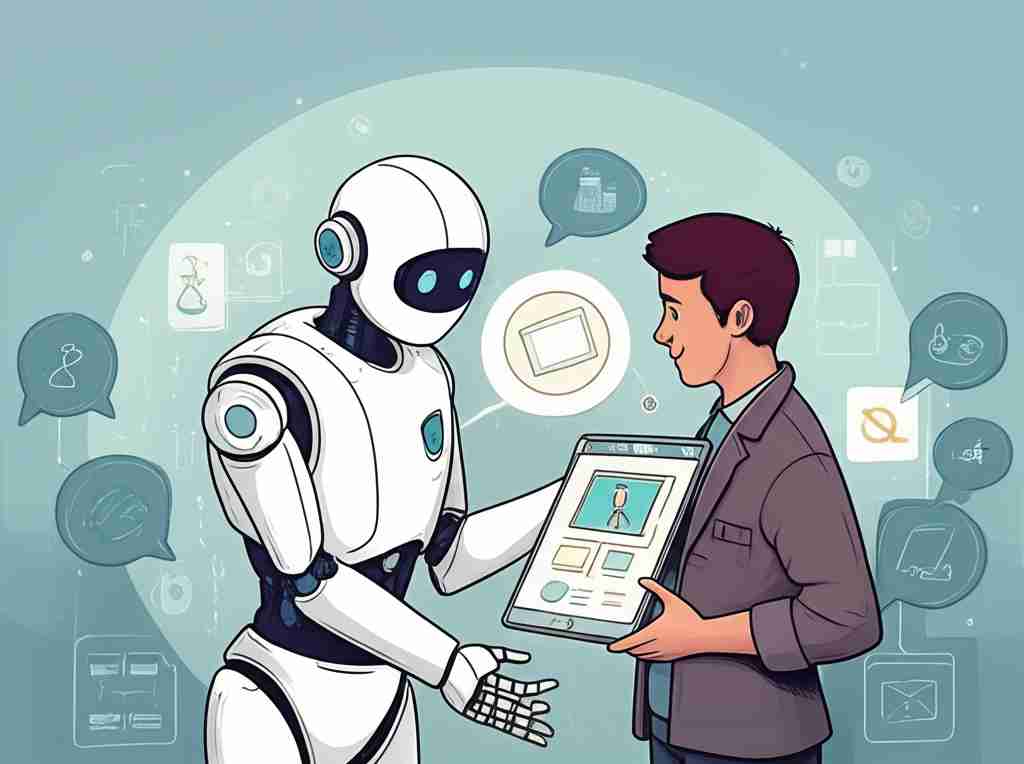
In other words, the headline “AI does not mean the robots are coming” captures an essential truth: AI adoption is much more about augmenting human abilities, automating information processing, and improving efficiency than unleashing an army of humanoid robots.
AI’s Role in the Economy: Digital Disruption and Physical Integration
AI is rapidly transforming both the so-called knowledge economy (the world of bits and bytes) and, increasingly, the material, physical economy (the world of atoms and photons):
- Knowledge Economy Disruption: AI tools are replacing or transforming jobs such as writing, accounting, legal analysis, customer relationship management, and financial research. These are areas where AI’s ability to process and generate information offers clear value.
- Physical Economy Integration: Efforts are now expanding into “embodied AI”—for example, autonomous cars, warehouse robots, and drones. This phase depends on gathering vast real-world (visual and sensory) data and solving complex problems of autonomy and robotics.
- Sector Transformation: Companies like Tesla, Amazon, and Apple are leveraging their expertise in data, software, hardware, and vertical integration to push the boundaries of what AI-enabled automation can achieve in manufacturing, logistics, and everyday products.
However, even as companies invest in robotics, the overwhelming reality is that the most common impact of AI continues to be found in software and information workflows—not in mechanical devices resembling humans.
Evidence from Research: Embodied AI is a Broad Concept, Not Just Robots
A study conducted at the Financial Times underscores this key message. The research, titled “AI does not mean the robots are coming,” explores how AI’s transformative potential extends far beyond the popular vision of robot workers. Instead, the study highlights that:
- AI encompasses a wide spectrum of technologies, from digital assistants and predictive analytics to computer vision and autonomous vehicles.
- True robot-like autonomy—a machine independently navigating and manipulating its environment—is only one form of “embodied AI” and is unlikely to dominate the near future.
- Most AI advancements drive innovations in data processing, simulation, and augmentation of existing processes—not wholesale replacement of human roles with robots.
- The study concludes that the focus should be on AI’s diverse applications and the opportunities it creates, not the myth of an impending robot uprising.
This authoritative perspective helps anchor expectations and offers a more balanced, evidence-based view of where AI is headed. For the full study, see AI does not mean the robots are coming.
Real-World Examples: How AI is Changing Industries Today
The transformation driven by AI is already apparent in many sectors, often in ways that are invisible to end users:
- Retail and Logistics: Amazon has reduced its human-to-robot worker ratio from 5:1 in 2017 to roughly 2:1 by 2024, gaining billions in annual savings and improved efficiency through robotics and AI.
- Transportation: Autonomous vehicle fleets, such as those run by Waymo, are on track to grow dramatically, with projections from 1,500 vehicles today to 23,000 by 2030. This adoption is less about creating humanoid robots and more about perfecting specialized machines for safer, more reliable transport.
- Consumer Wearables: Companies like Meta are developing AI-powered glasses with high-definition cameras, enabling real-world data collection and novel user experiences. These advances transform how we interact with the digital world without necessitating humanoid robots.
- Manufacturing: Embodied AI in manufacturing often takes the form of precise, repetitive-task robots (like robotic arms or fulfillment center bots), not general-purpose androids.
- Healthcare and Science: AI aids in diagnostic decision-making, workflow optimization, and research analysis, enhancing what human professionals can accomplish.
A crucial point: Where embodied AI is used, it is fitted to specific environments and tasks—such as a robot in a fulfillment center or a driverless car on the road—rather than general-purpose humanoids we recognize from films.
Practical Takeaways: Preparing for an AI-Augmented Future
Understanding the reality about AI arms everyone—businesses, policymakers, and individuals—with the tools to make informed decisions and prepare for ongoing changes. To adapt to this future:
- Embrace Continuous Learning: The most valuable workplace skills will be adaptability, digital literacy, and problem-solving alongside AI-driven systems.
- Identify Opportunities for Augmentation: Instead of fearing replacement, look for ways AI can handle routine tasks or large-scale data analysis, freeing up human energy for creativity and complex problem-solving.
- Focus on Data: As evidenced by companies like Tesla and Amazon, those who can gather, manage, and utilize high-quality data will be best positioned for success.
- Prioritize Human-Centric Design: As AI becomes more embedded in daily tools, ensuring it enhances, rather than replaces, the human experience will be critical.
- Avoid Hype, Seek Evidence: Ground perspectives in research and practical outcomes rather than science fiction scenarios or unfounded fears.
Conclusion: The Future of AI is in Our Hands
The real story of AI is not about robots taking over the world, but about a suite of technologies that will empower, augment, and sometimes automate facets of our lives and work. Rather than focusing on a dystopian vision of machines replacing humanity, we should recognize the myriad ways AI is already providing value—and how continued development will depend on partnership between humans and intelligent systems. The more we understand what AI truly is, the better prepared we are to direct its benefits toward a more innovative, productive, and human-centered future.
About Us
At AI Automation Brisbane, we make AI practical and approachable for businesses of all sizes. Our tailored solutions focus on automating admin tasks, enhancing daily workflows, and helping teams adapt confidently to the evolving technology landscape. With a people-first approach, we ensure AI empowers your business—reflecting the true, supportive potential of artificial intelligence discussed in this article.